Understanding as an Explicit and Assessable Component of Frontier AI Safety Decision

Frontier AI safety review today produces a heterogeneous mix of artefacts — system cards, capability evaluations, red-team reports, published Responsible Scaling Policy determinations, Frontier Safety Framework assessments, and occasionally structured safety cases. Decision makers need sufficient understanding (e.g. of hazards and their mitigation) to make responsible and accountable decisions to deploy and operate systems: if anyone builds frontier AI, then decision makers need to share the understanding.

We will explore how understanding could become an explicit, assessable, and defensible component of decision making: what developers, assessors, and decision makers grasp about system behavior, evidence, assumptions, risks, and residual uncertainty.
Alumni

Meet the authors

(Research Team Lead)

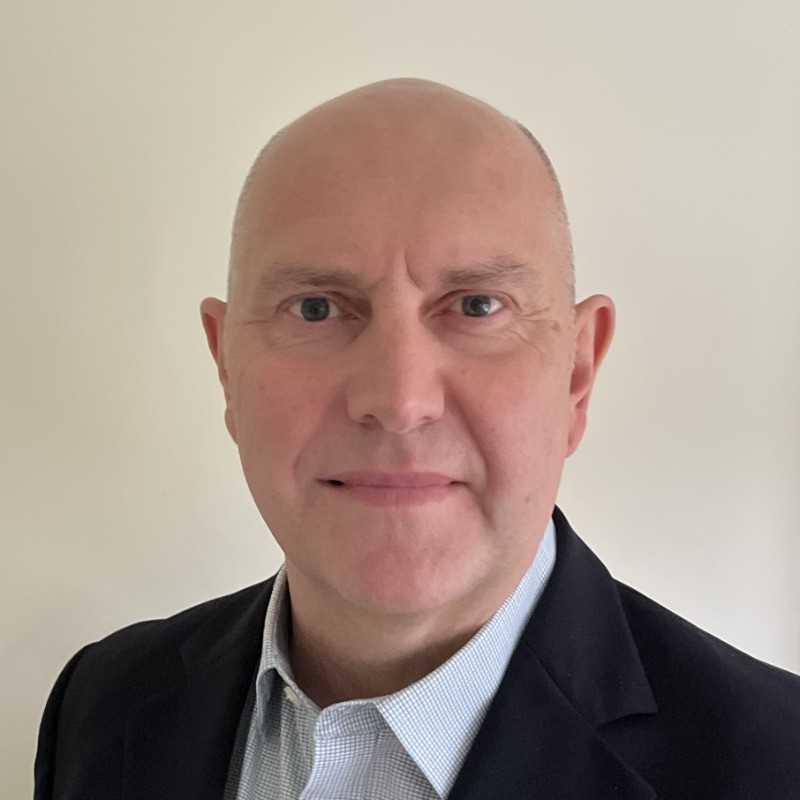
Steve Barrett

Steve is a Research Team Leader at Arcadia Impact and has previously worked for SaferAI on AI risk management.

He has worked in both automotive and enterprise cybersecurity as well as safety assurance in the automotive sector. He brings a strong track record in innovation and has spent 20+ years in research team leadership, standardization and systems engineering roles in the ICT sector.

Steve has an MBA and a PhD in communication engineering.

Alexandra Chirilă

Alexandra is a philosopher and AI governance researcher focused on AI understanding, evaluation, and the epistemic foundations of AI safety.

She completed her PhD in Philosophy at Alexandru Ioan Cuza University, where she examined the theoretical limits of contemporary AI, arguing that current AI systems lack the biologically grounded mechanisms required for semantic understanding and intentionality.

At Arcadia, Alexandra is developing epistemological frameworks that make understanding an explicit component of AI safety by assessing whether decision-makers sufficiently understand the risks of the AI systems they deploy.

Mamoon Masud

Mamoon is a systems engineer with a background in safety-critical autonomous vehicles, having worked on assurance, verification and validation at leading autonomous vehicle programmes.

With the AI Governance Taskforce, he is working on operationalizing understanding as a measurable & defensible input to frontier AI deployment decisions and adapting assurance methods from autonomous vehicles industry to frontier AI and deepening his expertise at the intersection of technical assurance and governance.

David Meredith Hardy

David operates at the interface between domains - translating research for policy, developing AI for human benefit, and connecting teams to wider impacts. His 17-year career in the Civil Service has spanned operations, decision science, strategy and leadership, all with a future focus and desire to drive systemic improvement.
With Arcadia, David is exploring practical ways to make better decisions about AI.

Phill Mulvana

IET Fellow and systems safety specialist shaping national‑scale governance for AI and autonomous systems. MSc in System Safety Engineering with 20+ years across safety‑critical sectors. Leads governance strategy for UK fusion energy, previously AI/AS programmes, owning approach, budget and stakeholders. Built a first-of-a-kind AI safety case for an agentic autonomous systems in safety critical environments.
Active in national policy via BSI/IET and FST programmes, operating at the intersection of frontier technology, regulation and delivery.

Alumni

Meet the authors

Steve Barrett

(Research Team Lead)

Steve is a Research Team Leader at Arcadia Impact and has previously worked for SaferAI on AI risk management.

He has worked in both automotive and enterprise cybersecurity as well as safety assurance in the automotive sector. He brings a strong track record in innovation and has spent 20+ years in research team leadership, standardization and systems engineering roles in the ICT sector.

Steve has an MBA and a PhD in communication engineering.

Alexandra Chirilă

Alexandra is a philosopher and AI governance researcher focused on AI understanding, evaluation, and the epistemic foundations of AI safety.

She completed her PhD in Philosophy at Alexandru Ioan Cuza University, where she examined the theoretical limits of contemporary AI, arguing that current AI systems lack the biologically grounded mechanisms required for semantic understanding and intentionality.

At Arcadia, Alexandra is developing epistemological frameworks that make understanding an explicit component of AI safety by assessing whether decision-makers sufficiently understand the risks of the AI systems they deploy.

Mamoon Masud

Mamoon is a systems engineer with a background in safety-critical autonomous vehicles, having worked on assurance, verification and validation at leading autonomous vehicle programmes.

With the AI Governance Taskforce, he is working on operationalizing understanding as a measurable & defensible input to frontier AI deployment decisions and adapting assurance methods from autonomous vehicles industry to frontier AI and deepening his expertise at the intersection of technical assurance and governance.

David Meredith Hardy

David operates at the interface between domains - translating research for policy, developing AI for human benefit, and connecting teams to wider impacts. His 17-year career in the Civil Service has spanned operations, decision science, strategy and leadership, all with a future focus and desire to drive systemic improvement.
With Arcadia, David is exploring practical ways to make better decisions about AI.

Phill Mulvana

IET Fellow and systems safety specialist shaping national‑scale governance for AI and autonomous systems. MSc in System Safety Engineering with 20+ years across safety‑critical sectors. Leads governance strategy for UK fusion energy, previously AI/AS programmes, owning approach, budget and stakeholders. Built a first-of-a-kind AI safety case for an agentic autonomous systems in safety critical environments.
Active in national policy via BSI/IET and FST programmes, operating at the intersection of frontier technology, regulation and delivery.

Programme

AI Governance Taskforce

The AI Governance Taskforce is a career development programme for experienced professionals looking to transition careers into AI governance, focussed on reducing risks from advanced AI.
Participants work around existing commitments during our 12 week, remote, part-time cohorts, producing policy research in teams of 4, led by our Research Team Lead staff in partnership with recognised experts in the field. Teams write an academic-style paper and accompanying blog post to build knowledge, skills and work portfolios.